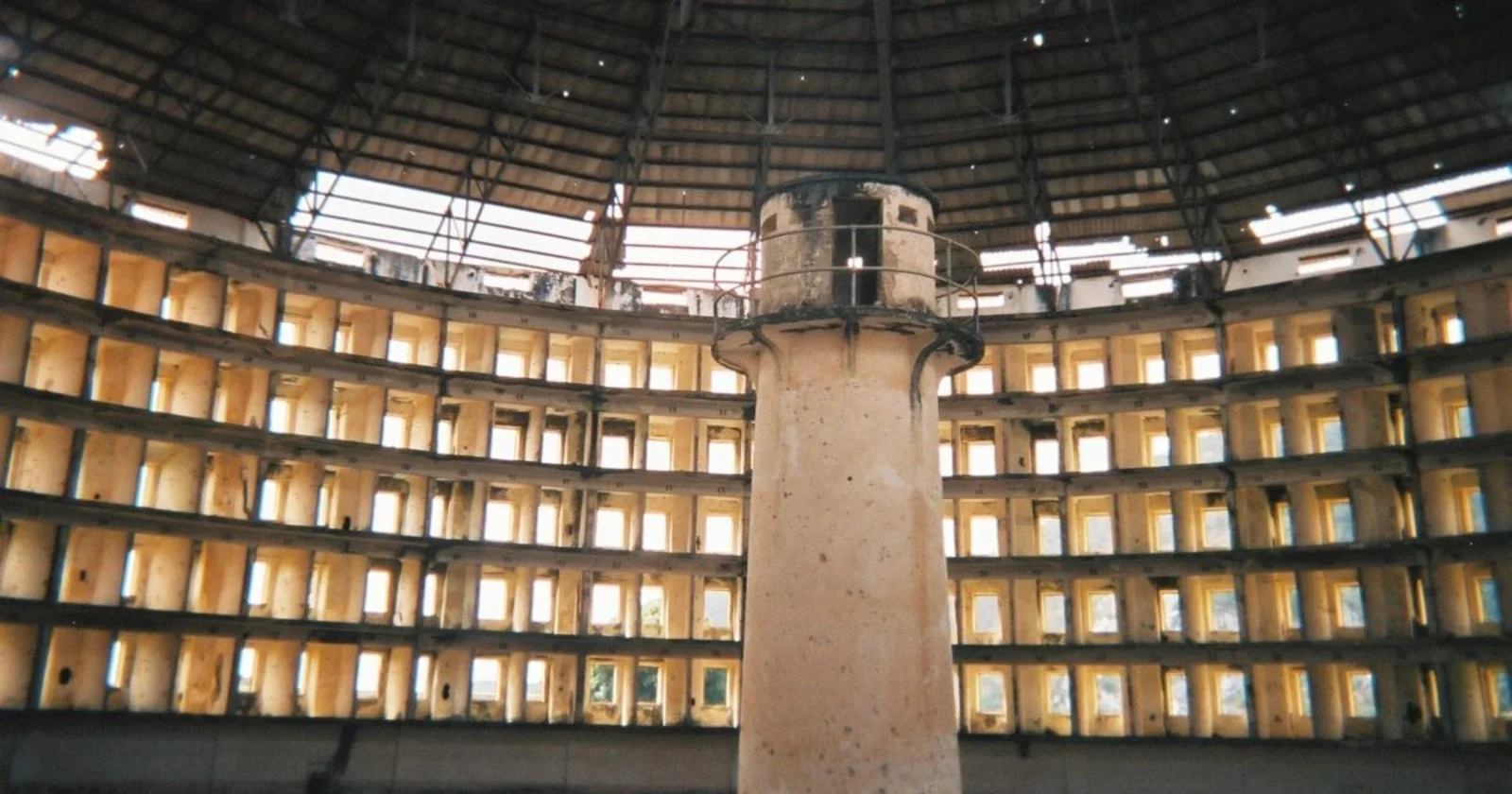
Panopticon Prison
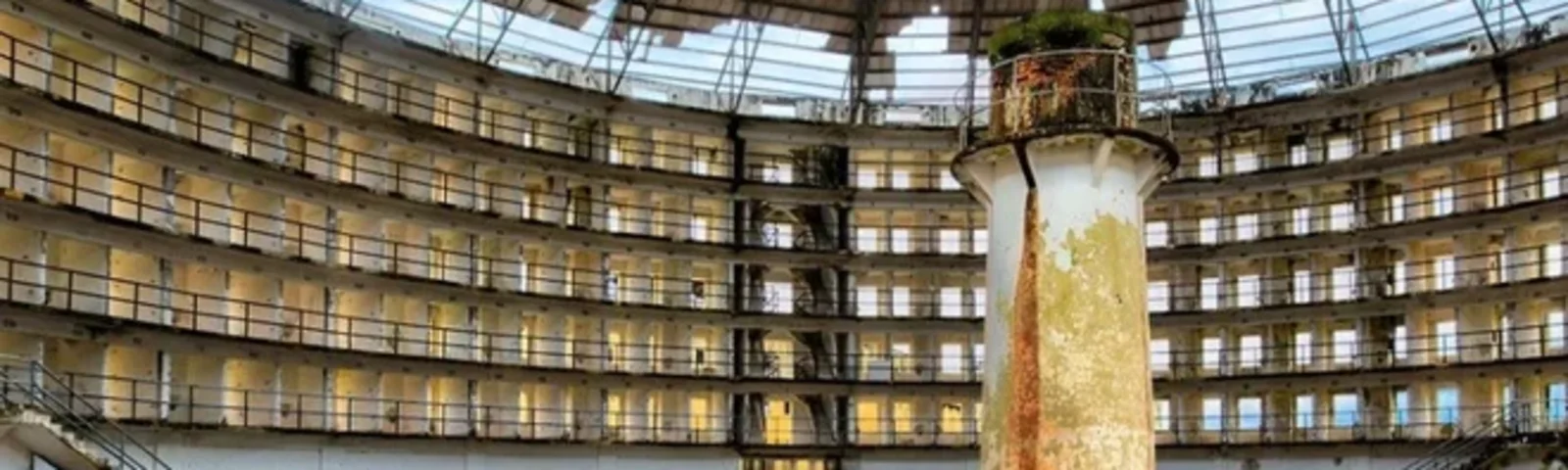
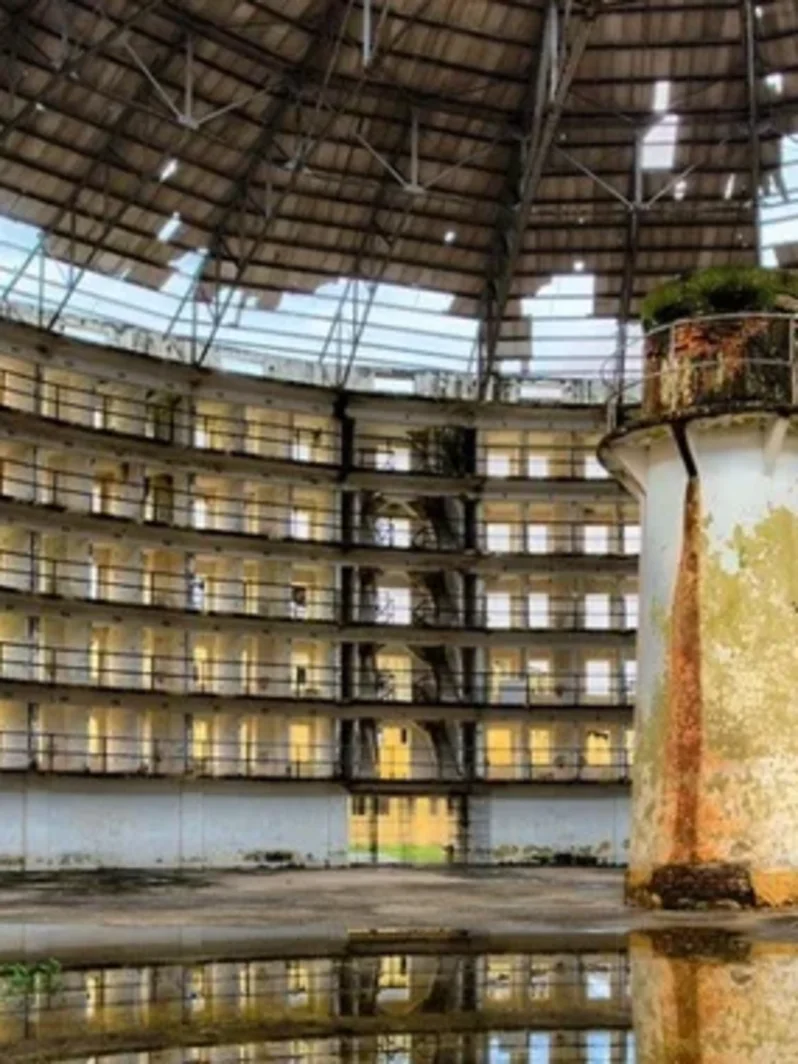
Jeremy Bentham (1748–1832), an English philosopher and social theorist, developed in the mid-1700sa system of social control that became a universal symbol of modern authority and discipline in the Western world: a prison system called Panopticon. The basic principle of the design was to monitor as many prisoners as possible with as few guards as possible and at minimal security costs. The building consists of a central tower for the guards, which is surrounded by a surrounded by a ring-shaped structure. The building was designed so that the cells are separated from one another by only a single wall, and each has an open side facing the central tower, but too far away for the prisoners to see the guards, who could thus keep an eye on the prisoners at all times. The prisoners are thus always vulnerable and visible to those in power. “When applied to individual cells, this layout will cost pennies: a small investment for a massive increase in security.” Although the first prototype was intended to be a prison complex, but its creator envisioned such a structure not merely as a means of punishment: “It could serve to punish the incorrigible, the confinement of the insane, the reformation of the immoral (…), or the steering of wayward generations toward the path of education: in short, we can use it as a death chamber, a pre-trial detention cell, a prison, as a reformatory, a workhouse, a manufactory, an asylum, a hospital, or a school.” (Jeremy Bentham: Panopticon)
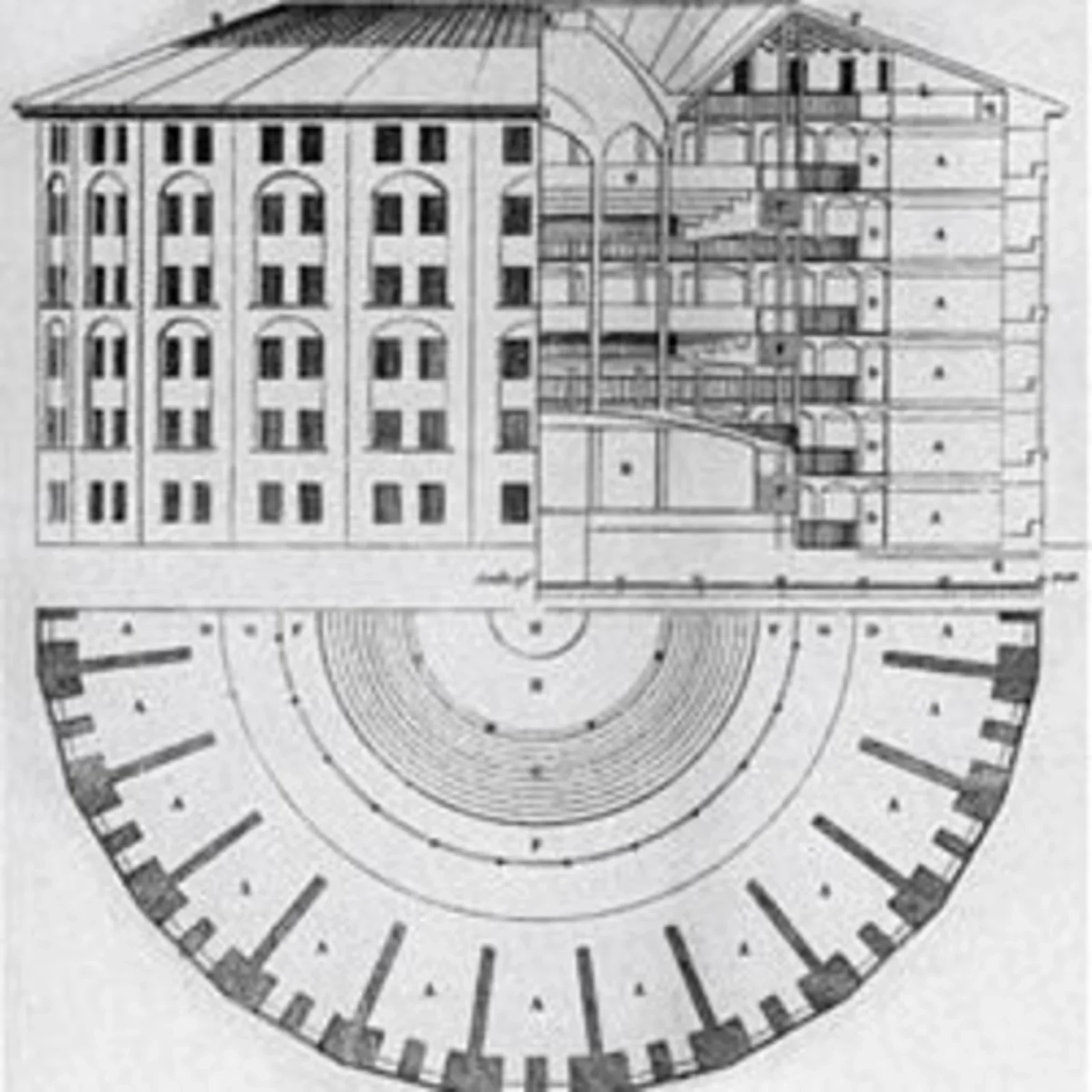
The sociological effect of this setup would be that prisoners (or psychopaths, patients, students…) are constantly aware that they could be observed at any moment, but they can never know exactly when. Within the walls of a building of this nature, power does not lie in physical presence, but in the awareness that someone might always be watching. The prisoners discipline themselves voluntarily, as the mere awareness of the possibility of surveillance is enough to maintain order. Thus, even a single guard is capable of managing multiple prisoners; in fact, it is not even necessary to be constantly on guard in the tower—the prisoners do not know they are alone.