Prison food today

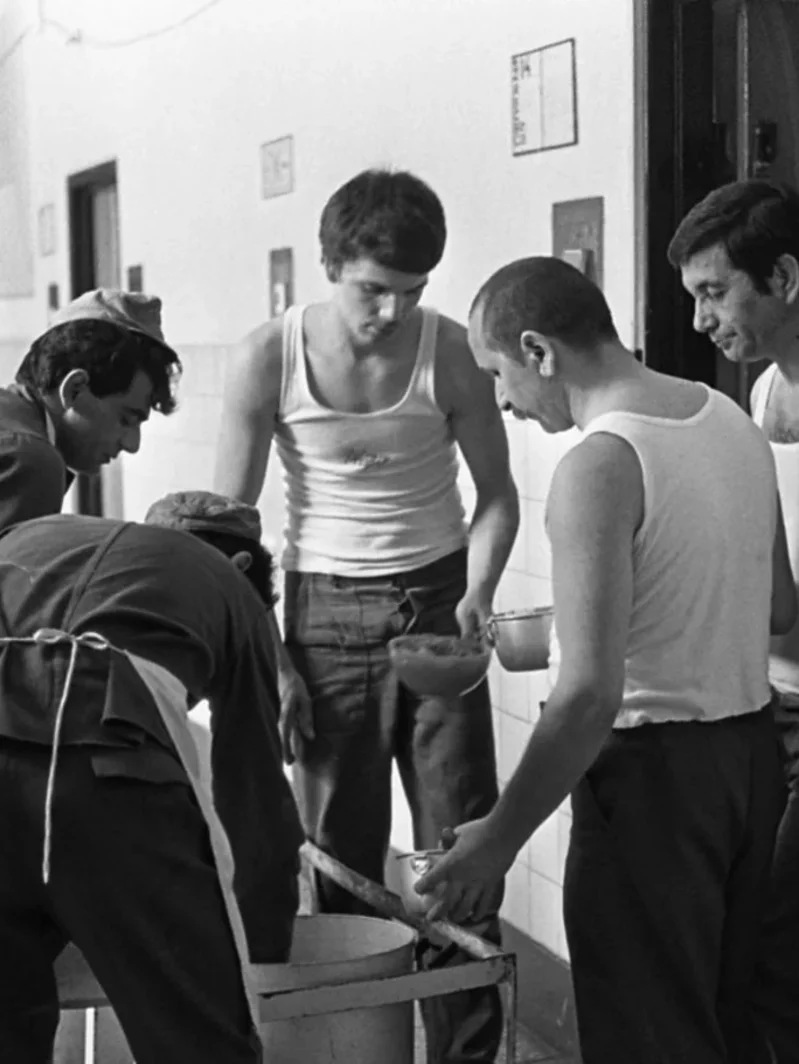
We’ve known for a long time that prisoners don’t live in luxury, but what exactly does prison food look like these days? It is the duty of the penal system to adequately provide prisoners with, among other things, clothing, dry, clean, and warm living quarters, as well as three meals a day as prescribed by law.
The huge halls with long tables and prisoners eating side by side that we see in American movies do not exist in Hungarian prisons. The reality in Hungary is completely different; there is no communal dining hall, and prisoners eat in their cells.
The food server delivers the portions by cart and hands them out when the cell doors are opened (at specific times). It’s just an urban legend that the server (the inmate in charge of food distribution) is an envied job because by manipulating the rations, he can gain certain advantages over the others. In reality, food distribution is always supervised by a guard, and as long as the rules are followed, there is no possibility of altering the portions. The inmates working as food servers are generally the same as any other inmate. The advantage of this job lies in the fact that it offers opportunities for more and better connections within the institution, and the relatively light workload makes the day pass more quickly. The prison kitchen operates under strict rules, and in most cases, the inmates themselves work at the stove. Alongside the civilian chef, there are employment supervisors—who take turns—and the inmates, who include a chef-pastry chef and kitchen assistants, all at the same time. The morning shift begins at dawn, and each shift works 12-hour rotations. Cold dinners are often served along with lunch, while hot dinners are served around 4:00 or 5:00 p.m. The menu is put together by a dietitian, the dishes change from week to week, and are prepared according to more than twenty types of specialized diets to ensure that every patient receives the meals prescribed by their attending physician. Inmates who require a special diet for religious or health reasons can also be satisfied. Separate meal plans are prepared for diabetics, those with lactose or gluten intolerance, and those on special diets. Depending on the composition of the inmate population, in addition to those with food allergies, the age of the meal recipients is also taken into account (different supplements are provided to adolescents and adults), as well as the physical and mental demands placed on the inmates (for example, whether they perform light or heavy physical labor), variety, and seasonality. The holidays wouldn’t be complete without traditional dishes. Stuffed cabbage at Christmas, fried fish, bejgli, lentil soup on New Year’s Day, ham at Easter, boiled eggs, horseradish cream with sour cream, and on May 1 and August 20, roasted sausage with dumplings. Whenever possible, the inmates’ requests are even taken into account when preparing the menu. The “bad boys’” favorites include goulash, hearty soups, lángos, and yeast-raised pastries.
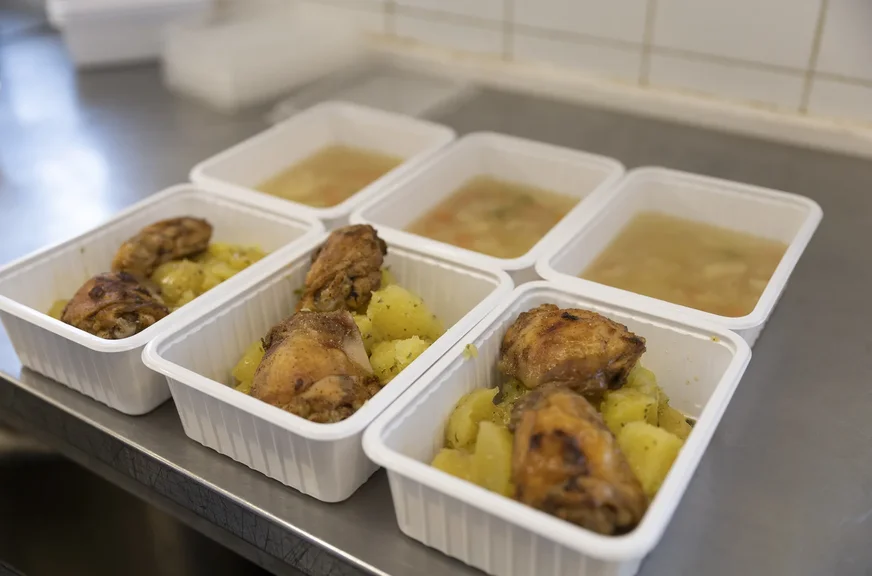
As is usually the case in mass catering, some items are served by the piece—such as meat—and others by volume—such as vegetable stews, which are typically served in 400-milliliter portions. Seconds aren’t typical, but if someone doesn’t take the food and some is left over, it’s distributed at the end. It is also difficult to calculate exact portions because the current headcount is always reported the day before, which can change at any moment. Some are taken in for questioning, some “drop by” that day to serve their sentence, and for others, the court terminates their pretrial detention, etc. These days, prisoners strive to grow and produce as many of their own raw materials as possible. So prisoners grow vegetables, raise animals, and in some places there is even a bakery that supplies local bakeries with baked goods. Thus, pork, chicken, vegetables, and some of the baked goods are produced by inmates for internal supply. Raw materials (pasta, sugar, flour, etc.) that cannot be produced by the inmates are procured through a public procurement process. Food is a central issue in the prison. It is very important that the inmates are satisfied with the food. If they receive their meals cold, if they remain hungry, they become more irritable and tense, making it harder to maintain order among them. There isn’t much joy for the inmates in prison; eating is one of the things that can cheer them up…
References: Dr. József Végh: The Shameful Ones 02049.doc (live.com) Fruzsina Albert: Frames of Life in the World of Wine and Beyond - Frames of Life: On This Side and Beyond Prison (Sociological Studies 2015/2.) (oszk.hu)
https://mfor.hu/cikkek/makro/a-rabok-azt-eszik-amit-maguk-megtermelnek.html